A University of Massachusetts Amherst researcher has received a $1.3 million federal grant to advance an at-home HIV test that detects the p24 antigen with sensitivity far exceeding conventional laboratory methods, potentially transforming early diagnosis in resource-limited settings.
Chang Liu, an associate professor in the Riccio College of Engineering, secured the two-year award from the National Institutes of Health to refine a shoebox-sized prototype built on a proprietary mechanism called Click Chemistry Amplified Nanopore sensing. The technology detects extremely low concentrations of p24, a viral protein shed by HIV, without the complex pre-processing required for PCR testing.
The need is urgent. Roughly 5.3 million people worldwide are unaware of their HIV status, serving as what Liu calls a “silent reservoir of transmission”. Existing home self-tests rely on antibody detection and typically take about 25 days after infection to return a positive result. PCR tests can detect viral RNA within roughly 10 days but require clinical settings, specialized equipment, and higher costs. P24 antigen tests have historically been considered too insensitive for early detection outside hospitals.
Initial patient validation data suggest the new device could change that calculus. In Liu’s first tests with real patients, the prototype detected p24 in 87.3% of individuals with low viral loads—compared with just 18.2% for ELISA—and in 100% of those with high viral loads, versus 42.1% for ELISA.
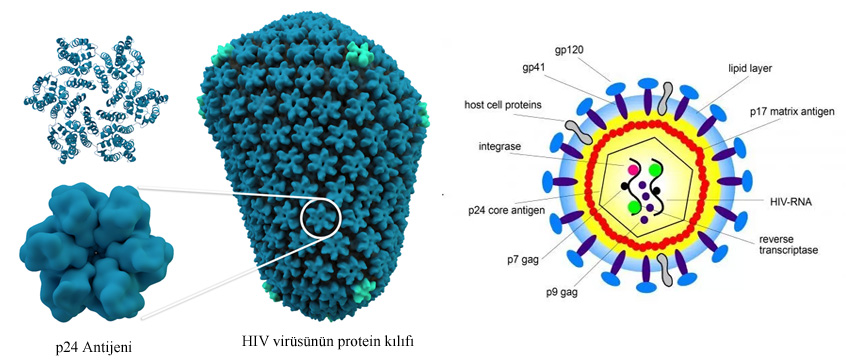
The phase two grant supports clinical validation for self-testing use involving 300 patients at Prisma Health in South Carolina, conducted with Helmut Albrecht, medical director of the Center of Infectious Diseases Research and Policy. Beyond initial screening, the research will evaluate whether the device can track antigen fluctuations in patients undergoing antiretroviral therapy.
“The device should be very easy for them to operate, even if they have limited education or no technical background,” Liu said in a release.
The ultimate goal is to launch a spinoff startup to transition the technology from the university laboratory to public use. If successful, the device could help close a persistent gap in the “first 95” benchmark—the global target of ensuring 95% of people living with HIV know their status.
Separately, the diagnostics market continues to see incremental advances in p24 detection. The FDA in January cleared a quality control material for monitoring HIV-1 p24 antigen testing precision in laboratories, while new generations of p24-specific antibodies are being developed to improve combo assay performance across diverse HIV strains.
Post time: Nov-12-2026